
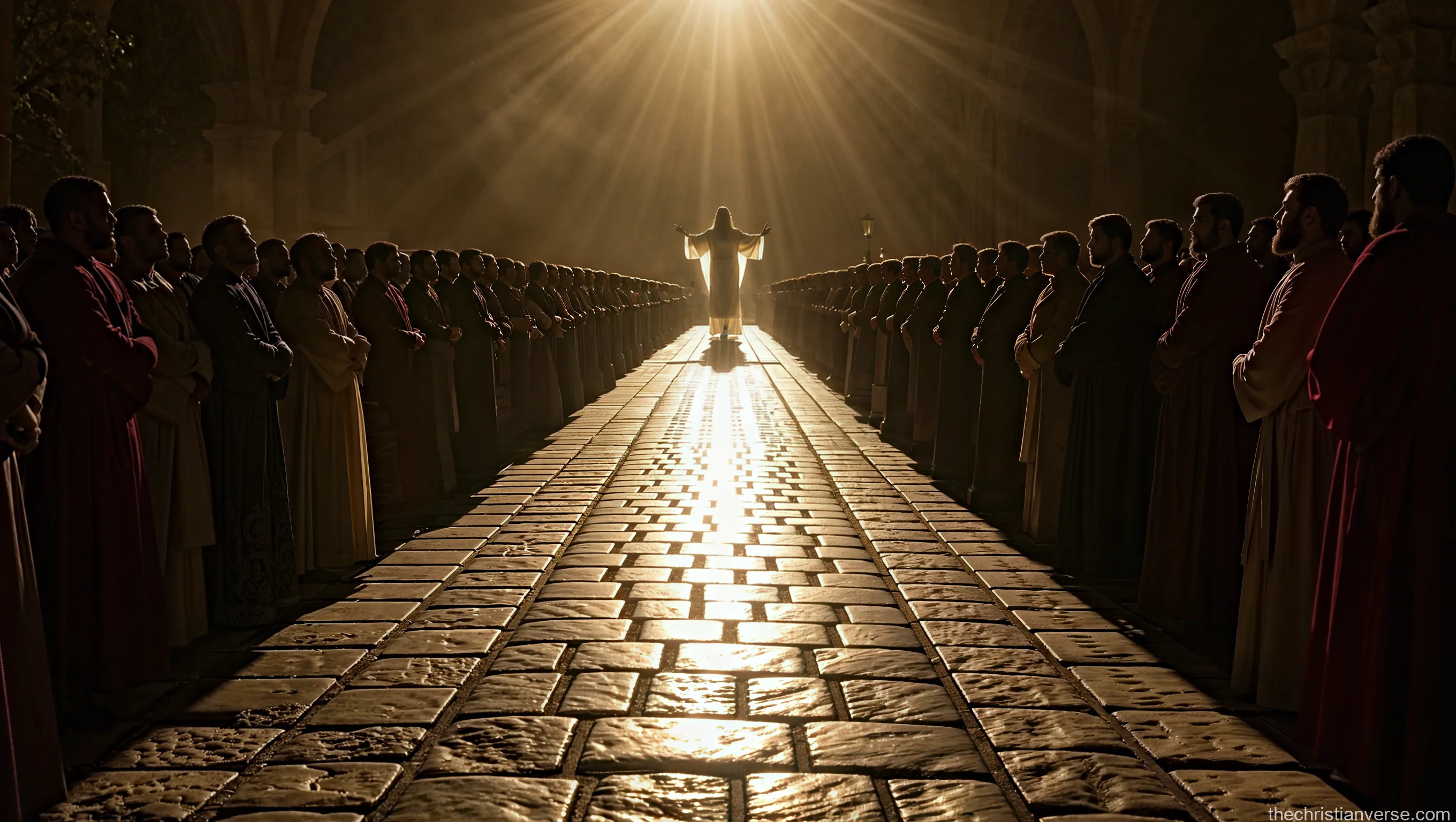
Tobit 13:17 - The streets of Jerusalem will be paved with beryl, carbuncle, and stones of Ophir.
Select Bible Verse
Filter Categories
A
B
C
D
E
F
G
H
I
J
K
L
M
N
O
P
R
S
T
U
V
W
What does "Tobit 13:17" mean?
The verse "The streets of Jerusalem will be paved with beryl, carbuncle, and stones of Ophir" from Tobit 13:17 is a highly symbolic statement about the future glory and prosperity of Jerusalem and the restored Israel. It's not meant to be taken literally as a description of a physical reconstruction. Here's a breakdown of the meaning:
Beryl, Carbuncle, and Stones of Ophir: These are all precious and valuable stones.
Beryl: A gemstone that comes in a variety of colors (e.g., emerald, aquamarine). It represents beauty, durability, and wealth.
Carbuncle: Thought to be a red garnet or ruby. It symbolizes fire, passion, and royalty.
Stones of Ophir: Ophir was a legendary land known for its abundance of gold and precious materials (1 Kings 9:28, 10:11). It represents immense wealth and luxury.
Streets of Jerusalem: Streets are pathways for people to walk. They represent the way of life, the experiences of the people, and the interactions within the city.
Overall Meaning: The verse signifies that Jerusalem will be a city of unprecedented glory, beauty, and prosperity in the future. It uses the symbolism of precious stones to convey that:
Divine Blessing: God will bestow extraordinary blessings upon Jerusalem.
Abundance and Wealth: The city will experience a time of unparalleled material abundance.
Spiritual Transformation: The glory also hints at a spiritual transformation and a renewed relationship with God.
New Creation: The verse points towards a vision of God's new creation.
How to Interpret the Verse:
Figurative Language: It's important to recognize that this is poetic and figurative language. The author uses imagery to paint a picture of a glorious future.
Hope and Restoration: The passage expresses hope for the restoration of Israel and the rebuilding of Jerusalem after a period of exile and suffering. It's a promise of a brighter future.
Spiritual Significance: While the verse has a literal reference to the city of Jerusalem, it can also be understood to have a spiritual significance, pointing to the ultimate destiny of God's people and the coming of His kingdom.
In summary, Tobit 13:17 is a powerful and inspiring verse that paints a vivid picture of the future glory and prosperity of Jerusalem, using precious stones to symbolize divine blessing, material abundance, and spiritual transformation. It's a message of hope and restoration for God's people.
Tobit 13:17 - The streets of Jerusalem will be paved with beryl, carbuncle, and stones of Ophir.
What does "Tobit 13:17" mean?
The verse "The streets of Jerusalem will be paved with beryl, carbuncle, and stones of Ophir" from Tobit 13:17 is a highly symbolic statement about the future glory and prosperity of Jerusalem and the restored Israel. It's not meant to be taken literally as a description of a physical reconstruction. Here's a breakdown of the meaning:
Beryl, Carbuncle, and Stones of Ophir: These are all precious and valuable stones.
Beryl: A gemstone that comes in a variety of colors (e.g., emerald, aquamarine). It represents beauty, durability, and wealth.
Carbuncle: Thought to be a red garnet or ruby. It symbolizes fire, passion, and royalty.
Stones of Ophir: Ophir was a legendary land known for its abundance of gold and precious materials (1 Kings 9:28, 10:11). It represents immense wealth and luxury.
Streets of Jerusalem: Streets are pathways for people to walk. They represent the way of life, the experiences of the people, and the interactions within the city.
Overall Meaning: The verse signifies that Jerusalem will be a city of unprecedented glory, beauty, and prosperity in the future. It uses the symbolism of precious stones to convey that:
Divine Blessing: God will bestow extraordinary blessings upon Jerusalem.
Abundance and Wealth: The city will experience a time of unparalleled material abundance.
Spiritual Transformation: The glory also hints at a spiritual transformation and a renewed relationship with God.
New Creation: The verse points towards a vision of God's new creation.
How to Interpret the Verse:
Figurative Language: It's important to recognize that this is poetic and figurative language. The author uses imagery to paint a picture of a glorious future.
Hope and Restoration: The passage expresses hope for the restoration of Israel and the rebuilding of Jerusalem after a period of exile and suffering. It's a promise of a brighter future.
Spiritual Significance: While the verse has a literal reference to the city of Jerusalem, it can also be understood to have a spiritual significance, pointing to the ultimate destiny of God's people and the coming of His kingdom.
In summary, Tobit 13:17 is a powerful and inspiring verse that paints a vivid picture of the future glory and prosperity of Jerusalem, using precious stones to symbolize divine blessing, material abundance, and spiritual transformation. It's a message of hope and restoration for God's people.