
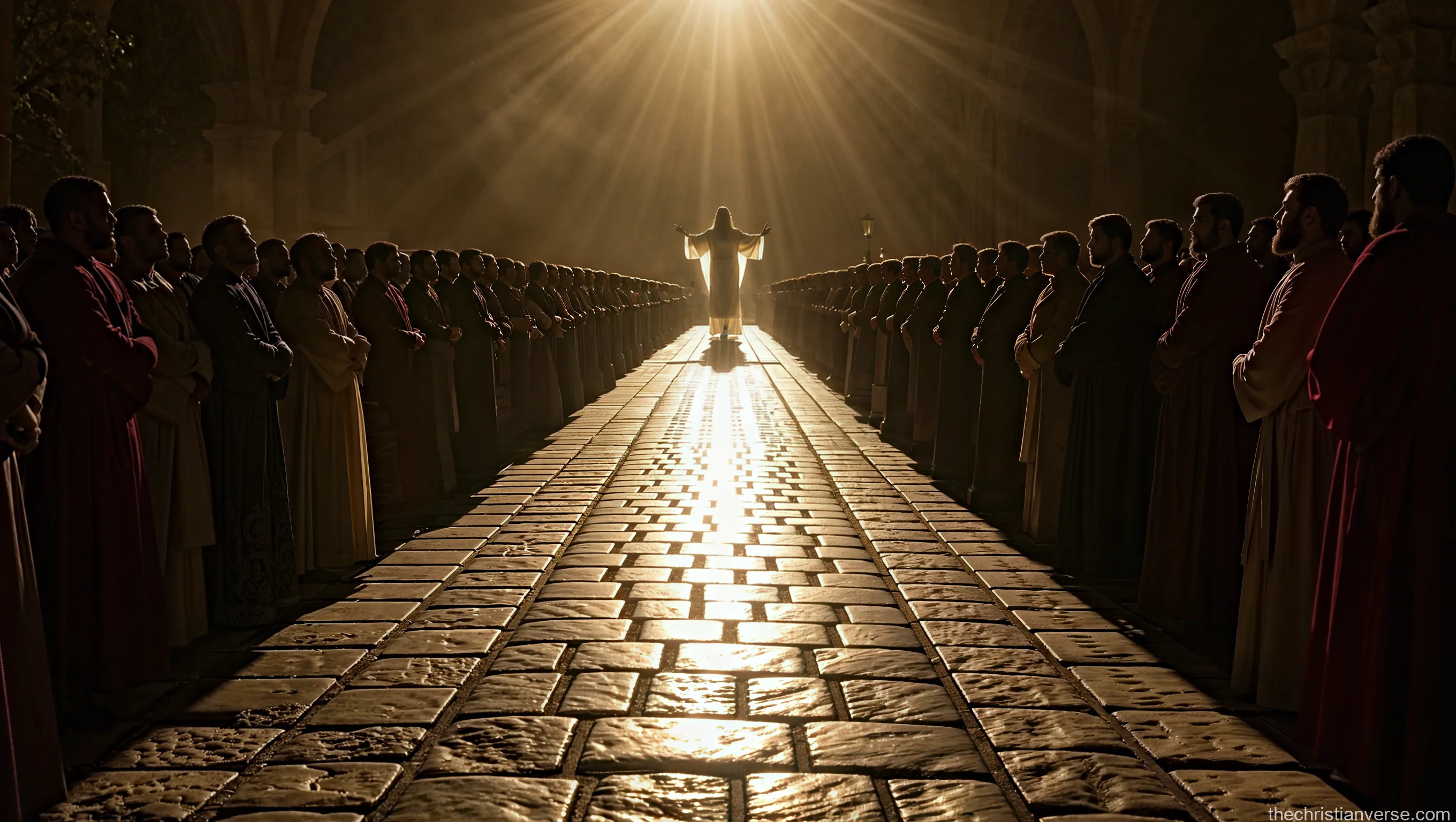
John 12:13 - they took the branches of the palm trees, and went out to meet him, and cried out, “Hosanna! Blessed is he who comes in the name of the Lord, Psalm 118:25-26 the King of Israel!”
Select Bible Verse
Filter Categories
A
B
C
D
E
F
G
H
I
J
K
L
M
N
O
P
R
S
T
U
V
W
What does "John 12:13" mean?
This verse from John 12:13 describes a powerful and symbolic event during Jesus' triumphant entry into Jerusalem, a few days before his crucifixion. Let's break it down:
"They took the branches of the palm trees, and went out to meet him..." Palm branches were a symbol of victory, triumph, and royalty. Waving them was a gesture of honor and reverence, much like a modern-day ticker-tape parade. The people were acknowledging Jesus as someone special and deserving of celebration.
"...and cried out, “Hosanna! Blessed is he who comes in the name of the Lord, the King of Israel!”" This cry is a crucial part of the verse's meaning:
"Hosanna!" is a Hebrew word that means "Save us!" or "Grant salvation!" It was originally a plea for help, but by this time, it had also become an expression of praise and adoration. The crowd was essentially acknowledging Jesus as their potential savior.
"Blessed is he who comes in the name of the Lord..." This is a direct quote from Psalm 118:26. It was a common greeting used to welcome pilgrims to Jerusalem, but in this context, it takes on a deeper significance. It implies that Jesus is sent by God and represents God's authority.
"...the King of Israel!”" This is the most politically charged and significant part of the acclamation. By declaring Jesus as the "King of Israel," the crowd was making a bold statement. It suggests that they believed Jesus was the promised Messiah, the rightful heir to David's throne, who would deliver them from Roman oppression and restore Israel to its former glory.
Overall Meaning and Significance:
The verse highlights the following:
Acknowledgement of Jesus' Kingship: The crowd, at least in that moment, recognized Jesus as the Messiah, the promised king.
Hope for Deliverance: The use of "Hosanna" indicates a desire for salvation, both spiritual and possibly political, from their current circumstances.
Fulfillment of Prophecy: The use of Psalm 118:25-26 directly links Jesus to Old Testament prophecies about the coming Messiah.
Irony and Foreshadowing: There's a profound irony in this scene. The crowd welcomes Jesus as king, but within a week, many of them will turn against him, calling for his crucifixion. This contrast underscores the fickleness of the crowd and foreshadows Jesus' impending suffering and death.
Why this is important:
This event is significant for several reasons:
Public Declaration: This was a public declaration of Jesus' messianic identity, which would inevitably draw the attention of the religious and political authorities.
Culmination of Jesus' Ministry: The Triumphal Entry represents the culmination of Jesus' public ministry. He had performed miracles, taught with authority, and challenged the status quo, leading up to this moment of widespread recognition.
Beginning of the Passion Week: It marks the beginning of the Passion Week, the final week of Jesus' life, which includes the Last Supper, his betrayal, arrest, trial, crucifixion, and resurrection.
Theological Implications: This event is seen by Christians as a fulfillment of Old Testament prophecy and a significant step in God's plan of salvation.
In conclusion, John 12:13 captures a pivotal moment in the Gospels. It's a complex scene filled with hope, joy, and foreshadowing, revealing the depth of Jesus' mission and the volatile nature of human faith.
John 12:13 - they took the branches of the palm trees, and went out to meet him, and cried out, “Hosanna! Blessed is he who comes in the name of the Lord, Psalm 118:25-26 the King of Israel!”
What does "John 12:13" mean?
This verse from John 12:13 describes a powerful and symbolic event during Jesus' triumphant entry into Jerusalem, a few days before his crucifixion. Let's break it down:
"They took the branches of the palm trees, and went out to meet him..." Palm branches were a symbol of victory, triumph, and royalty. Waving them was a gesture of honor and reverence, much like a modern-day ticker-tape parade. The people were acknowledging Jesus as someone special and deserving of celebration.
"...and cried out, “Hosanna! Blessed is he who comes in the name of the Lord, the King of Israel!”" This cry is a crucial part of the verse's meaning:
"Hosanna!" is a Hebrew word that means "Save us!" or "Grant salvation!" It was originally a plea for help, but by this time, it had also become an expression of praise and adoration. The crowd was essentially acknowledging Jesus as their potential savior.
"Blessed is he who comes in the name of the Lord..." This is a direct quote from Psalm 118:26. It was a common greeting used to welcome pilgrims to Jerusalem, but in this context, it takes on a deeper significance. It implies that Jesus is sent by God and represents God's authority.
"...the King of Israel!”" This is the most politically charged and significant part of the acclamation. By declaring Jesus as the "King of Israel," the crowd was making a bold statement. It suggests that they believed Jesus was the promised Messiah, the rightful heir to David's throne, who would deliver them from Roman oppression and restore Israel to its former glory.
Overall Meaning and Significance:
The verse highlights the following:
Acknowledgement of Jesus' Kingship: The crowd, at least in that moment, recognized Jesus as the Messiah, the promised king.
Hope for Deliverance: The use of "Hosanna" indicates a desire for salvation, both spiritual and possibly political, from their current circumstances.
Fulfillment of Prophecy: The use of Psalm 118:25-26 directly links Jesus to Old Testament prophecies about the coming Messiah.
Irony and Foreshadowing: There's a profound irony in this scene. The crowd welcomes Jesus as king, but within a week, many of them will turn against him, calling for his crucifixion. This contrast underscores the fickleness of the crowd and foreshadows Jesus' impending suffering and death.
Why this is important:
This event is significant for several reasons:
Public Declaration: This was a public declaration of Jesus' messianic identity, which would inevitably draw the attention of the religious and political authorities.
Culmination of Jesus' Ministry: The Triumphal Entry represents the culmination of Jesus' public ministry. He had performed miracles, taught with authority, and challenged the status quo, leading up to this moment of widespread recognition.
Beginning of the Passion Week: It marks the beginning of the Passion Week, the final week of Jesus' life, which includes the Last Supper, his betrayal, arrest, trial, crucifixion, and resurrection.
Theological Implications: This event is seen by Christians as a fulfillment of Old Testament prophecy and a significant step in God's plan of salvation.
In conclusion, John 12:13 captures a pivotal moment in the Gospels. It's a complex scene filled with hope, joy, and foreshadowing, revealing the depth of Jesus' mission and the volatile nature of human faith.