
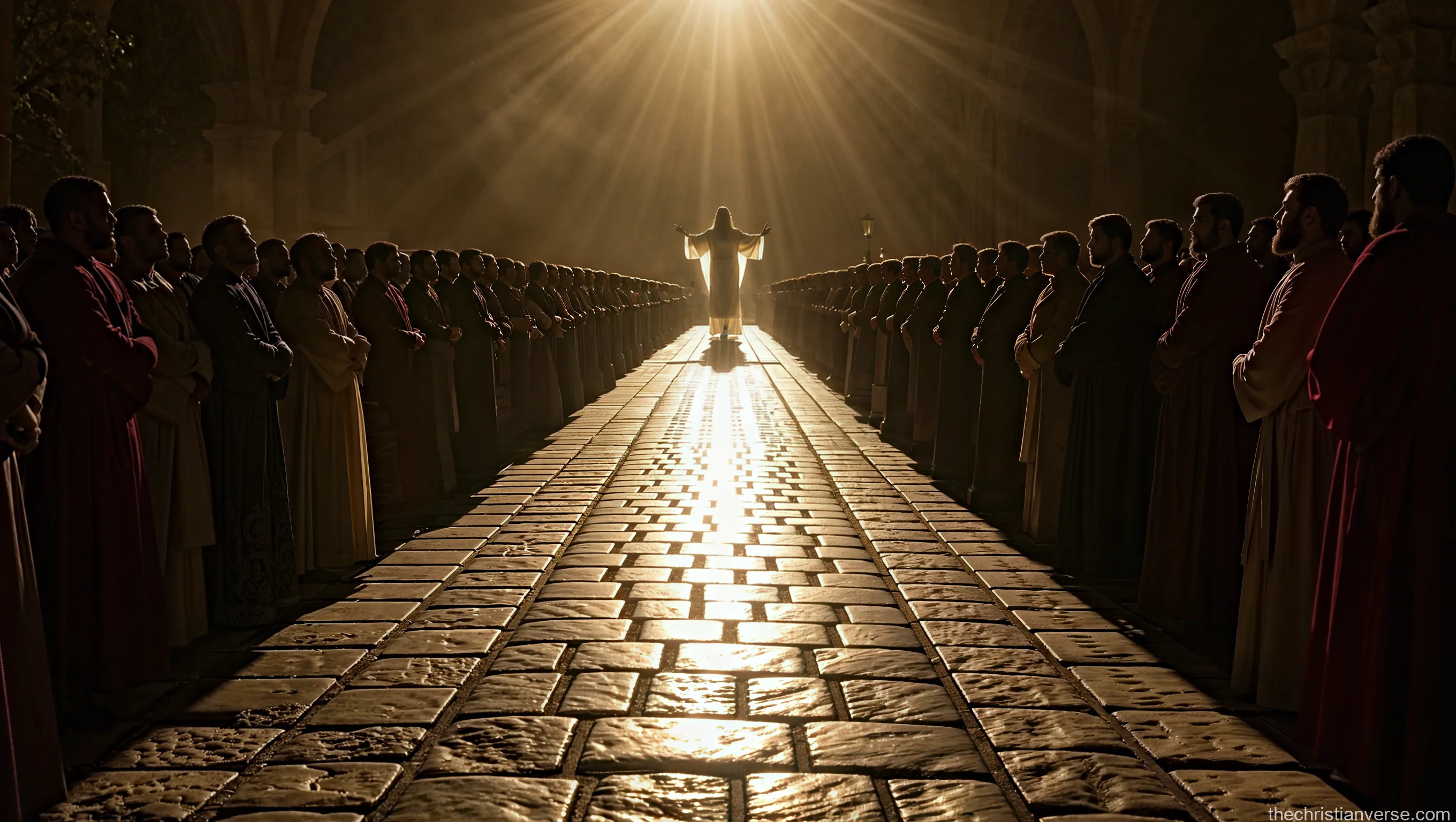
Ezekiel 20:40 - For in my holy mountain, in the mountain of the height of Israel,” says the Lord Yahweh, “there all the house of Israel, all of them, shall serve me in the land. There I will accept them, and there I will require your offerings and the first fruits of your offerings, with all your holy things.
Select Bible Verse
Filter Categories
A
B
C
D
E
F
G
H
I
J
K
L
M
N
O
P
R
S
T
U
V
W
What does "Ezekiel 20:40" mean?
Ezekiel 20:40 is a prophetic verse that speaks to the restoration of Israel after a period of judgment and exile. Let's break down its meaning:
"For in my holy mountain, in the mountain of the height of Israel,": This refers to Jerusalem, particularly the Temple Mount. It's called the "holy mountain" because God's presence was believed to dwell there. "The mountain of the height of Israel" emphasizes its prominent location and significance as the center of Israel's religious and national life.
"says the Lord Yahweh,": This is a common phrase in Ezekiel, emphasizing that the message is a direct word from God.
"there all the house of Israel, all of them, shall serve me in the land.": This signifies a complete reunification and return of the scattered Israelites to their homeland. "All of them" suggests a comprehensive gathering, not just a remnant. Their service to God implies a renewed covenant relationship characterized by obedience and worship.
"There I will accept them,": This is a key aspect of the restoration. God had rejected Israel due to their idolatry and disobedience. This verse promises acceptance and forgiveness upon their return.
"and there I will require your offerings and the first fruits of your offerings, with all your holy things.": This indicates the restoration of Temple worship. God will again receive their sacrifices, offerings, and consecrated possessions. "First fruits" refers to the initial harvest dedicated to God, symbolizing gratitude and acknowledging His provision. "All your holy things" encompasses everything set apart for religious purposes.
In summary, the verse speaks of a future time when:
Israel will be restored to their land, centered around Jerusalem.
The entire nation will serve God faithfully.
God will accept their worship and offerings, signifying a renewed covenant relationship.
Interpretational Considerations:
Literal vs. Figurative: There's debate about whether this prophecy should be interpreted literally as a physical restoration of Israel and the Temple, or figuratively as a spiritual restoration of God's people in a broader sense (perhaps through the church).
Timing: The timing of this fulfillment is also debated among different theological perspectives. Some believe it has already been partially fulfilled through the return of Jews to Israel in modern times. Others believe it is yet to be fully realized.
Context: It's important to read this verse within the broader context of Ezekiel 20 and the entire book of Ezekiel. The chapter details Israel's rebellion against God throughout their history, leading to judgment. This verse offers a message of hope and restoration after that judgment.
Ultimately, the verse points to a future where God's relationship with His people is restored, characterized by worship, obedience, and acceptance.
Ezekiel 20:40 - For in my holy mountain, in the mountain of the height of Israel,” says the Lord Yahweh, “there all the house of Israel, all of them, shall serve me in the land. There I will accept them, and there I will require your offerings and the first fruits of your offerings, with all your holy things.
What does "Ezekiel 20:40" mean?
Ezekiel 20:40 is a prophetic verse that speaks to the restoration of Israel after a period of judgment and exile. Let's break down its meaning:
"For in my holy mountain, in the mountain of the height of Israel,": This refers to Jerusalem, particularly the Temple Mount. It's called the "holy mountain" because God's presence was believed to dwell there. "The mountain of the height of Israel" emphasizes its prominent location and significance as the center of Israel's religious and national life.
"says the Lord Yahweh,": This is a common phrase in Ezekiel, emphasizing that the message is a direct word from God.
"there all the house of Israel, all of them, shall serve me in the land.": This signifies a complete reunification and return of the scattered Israelites to their homeland. "All of them" suggests a comprehensive gathering, not just a remnant. Their service to God implies a renewed covenant relationship characterized by obedience and worship.
"There I will accept them,": This is a key aspect of the restoration. God had rejected Israel due to their idolatry and disobedience. This verse promises acceptance and forgiveness upon their return.
"and there I will require your offerings and the first fruits of your offerings, with all your holy things.": This indicates the restoration of Temple worship. God will again receive their sacrifices, offerings, and consecrated possessions. "First fruits" refers to the initial harvest dedicated to God, symbolizing gratitude and acknowledging His provision. "All your holy things" encompasses everything set apart for religious purposes.
In summary, the verse speaks of a future time when:
Israel will be restored to their land, centered around Jerusalem.
The entire nation will serve God faithfully.
God will accept their worship and offerings, signifying a renewed covenant relationship.
Interpretational Considerations:
Literal vs. Figurative: There's debate about whether this prophecy should be interpreted literally as a physical restoration of Israel and the Temple, or figuratively as a spiritual restoration of God's people in a broader sense (perhaps through the church).
Timing: The timing of this fulfillment is also debated among different theological perspectives. Some believe it has already been partially fulfilled through the return of Jews to Israel in modern times. Others believe it is yet to be fully realized.
Context: It's important to read this verse within the broader context of Ezekiel 20 and the entire book of Ezekiel. The chapter details Israel's rebellion against God throughout their history, leading to judgment. This verse offers a message of hope and restoration after that judgment.
Ultimately, the verse points to a future where God's relationship with His people is restored, characterized by worship, obedience, and acceptance.